Background
A fast-growing challenger bank in Vietnam wanted to strengthen its Employee Banking offerings for two priority sectors – healthcare and education. The bank recognised that traditional product-first development carried a high risk of failure in a competitive market and often failed to reflect real customer needs.
The bank engaged Doodle Design & partners to lead a 6–8 week CVP Co-Creation Sprint that blended customer research, design thinking, agile collaboration, and capability building to co-create customer-centred and validated CVPs, supported by strong internal input, ownership, and alignment.

1. Discover
Doodle began by conducting in-depth interviews with employees across the healthcare and education sectors. Each draft persona was validated through interviews with 8–10 real customer representatives from different life and need stages, ensuring authentic and actionable insights.
Through a structured decode and synthesis process, we developed eight customer personas, capturing pains, gains, behaviours, and motivations.
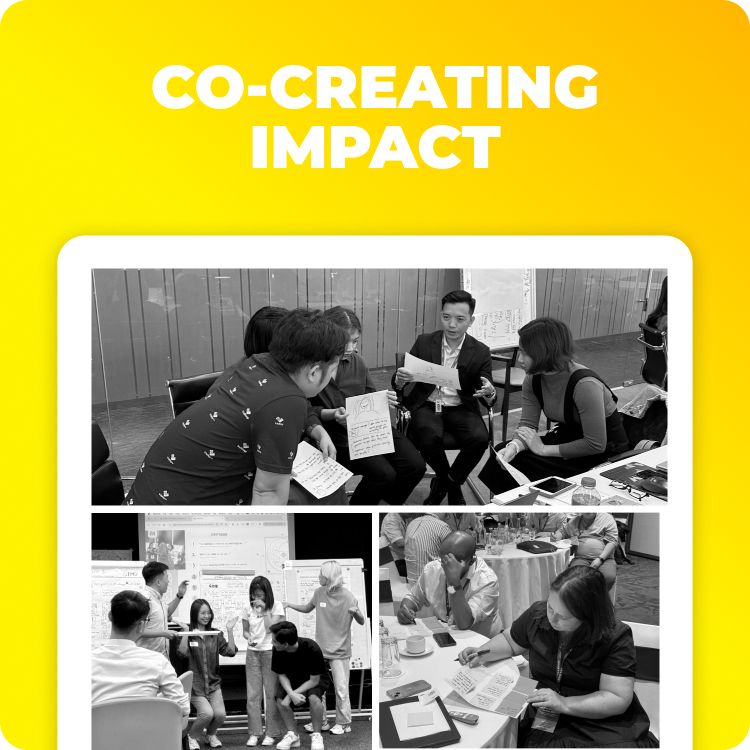
In a co-creation workshop, banking stakeholders were facilitated by Doodle to refine these personas together – building deep empathy, ownership, and alignment around the customer insights from the start.

2. Problem Framing
- Using empathy maps, customer insight reflection, and persona profiles, cross-functional teams reframed the research findings into a set of ‘How Might We…? Statements (HMWs) – or creative questions to unlock innovation opportunities.
- A prioritisation session then aligned all high-interest / high-influence stakeholders on the right customer problems to solve, reducing risk and focusing the sprint on the issues with the highest value for both customers and the bank.
“If you want creative solutions, start with creative questions.” Chris Elkin, Doodle Design

3. Ideation
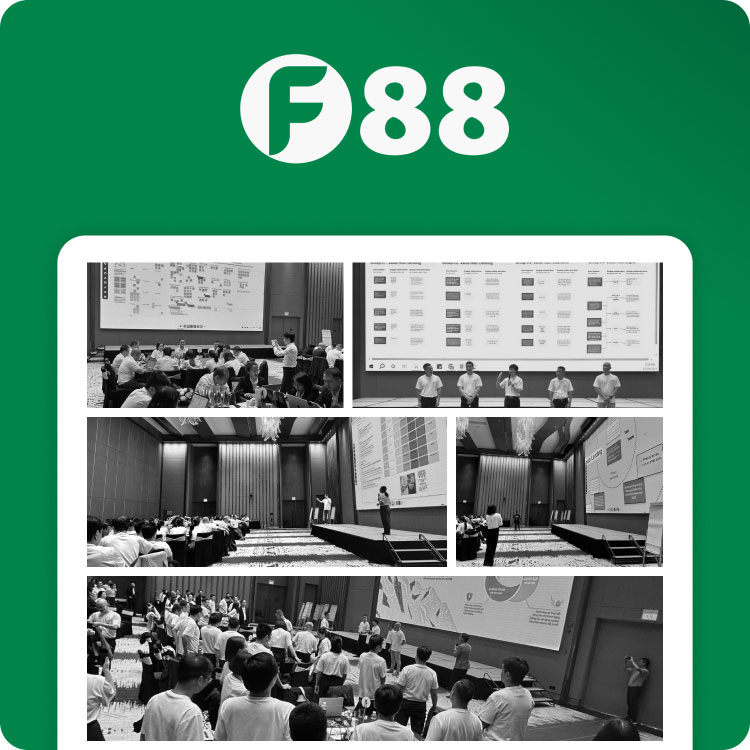
Using the prioritised HMWs, personas, and CVP canvas, Doodle designed and facilitated a high-energy ideation workshop with 40–50 cross-functional stakeholders from product, CX, digital, business, and IT.
Teams co-created a broad portfolio of solutions, which were shaped and refined into early CVP directions. We then developed prototype concepts—messaging, feature sets, experience flows—for early customer testing and validation.

CVP đã được thiết kế, và giản lược thông tin để bảo mật
The designed CVP with censored information

4. Iteration & Testing
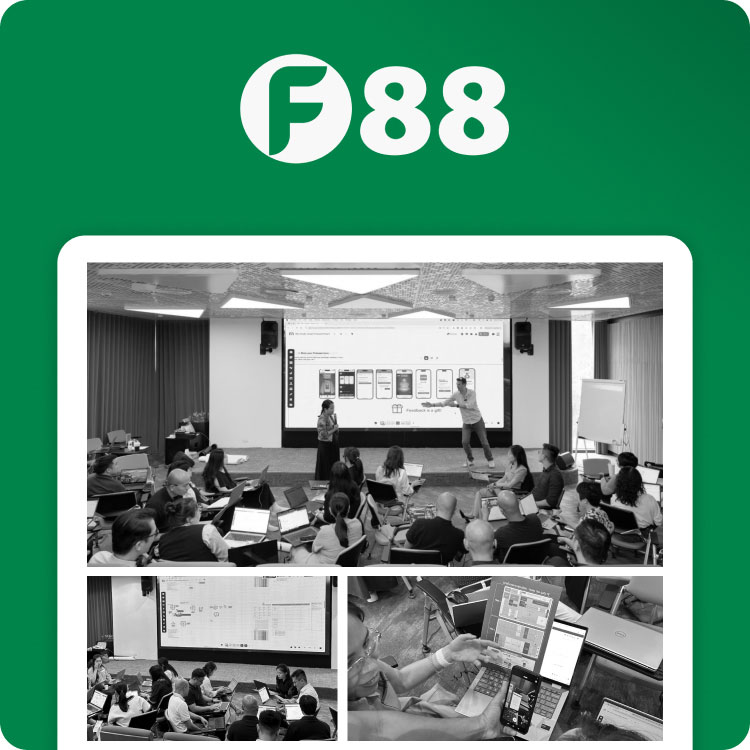
Doodle then designed and tested the prototype CVPs with more than 20 customer sessions, using a mix of qualitative, user think-aloud testing, interviews, and A/B testing.
This helped validate desirability, clarity, differentiation, and relevance.
Insights from testing were decoded to refine the CVPs, reframe challenges, and prioritise features based on highest customer desirability + internal feasibility of the bank’s ability to deliver.


5. Capability Building & Ways of Working
This was not a “consultant-behind-closed-doors” project.
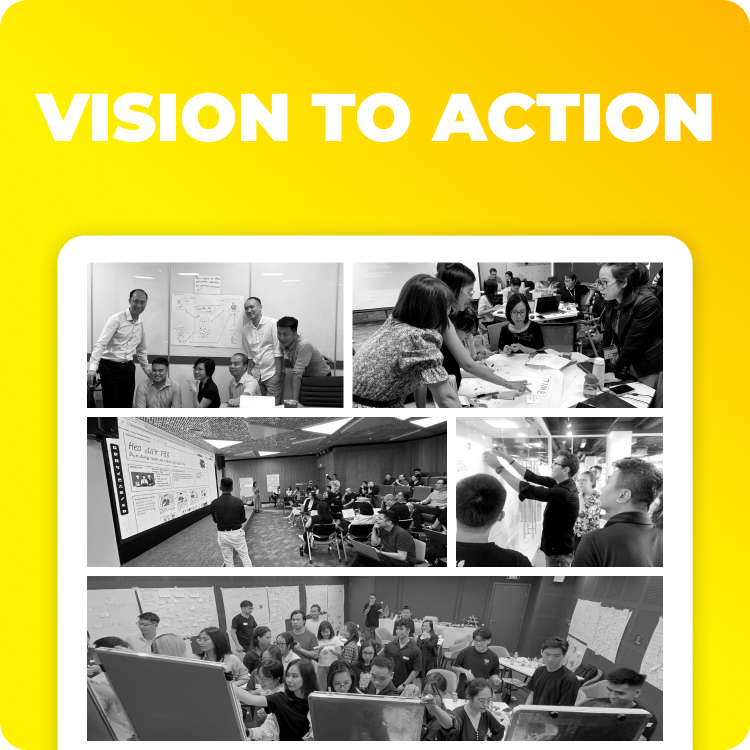
Over 40–50 banking stakeholders participated throughout the Design Thinking-led sprint, working side-by-side in a learn–do–lead model designed by Doodle Design.
Teams practiced real design thinking, agile collaboration, problem framing, ideation, prototyping, and testing – building new mindsets, skillsets, and toolkits that they can now use to lead future sprints themselves.
The sprint also built a core group of internal change makers equipped to drive customer-centric innovation and cross-functional collaboration into implementation phases and beyond.
“To support stakeholders throughout their collaboration with Doodle, the Doodle Design Thinking Academy Platform provides online, anytime, anywhere self-paced learning that strengthens and extends the impact of Doodle’s ‘learning by doing’ programmes and design sprints.
Short videos, practical templates, and reflective learning quizzes help participants learn Design Thinking easily, apply it more deeply during workshops, and continue using the methods afterwards – building confidence, a consistent language of collaboration, and repeatable ways of working across teams, whatever their challenge.”


6. Final Outcomes
- Eight validated personas for healthcare and education employee banking
- Each persona backed by interviews with 8–10 real customers
- Prioritised customer problems and innovation opportunities
- Co-created CVP concepts for two priority sectors
- Customer-tested prototypes with clear evidence of desirability and relevance
- Prioritised feature sets based on desirability and feasibility
- Clear CVP recommendations for Phase 1 and Phase 2
- A practical design roadmap for implementation
- Stronger cross-functional collaboration, alignment and customer-centricity
- Reduced risk by ensuring the bank was solving the right problems with the right solutions for the right people
- Bank Design Thinking ‘Change Makers’ with capabilities embedded across the bank to repeat these new ways of working to solve any challenge better